|
| Mitchell, played by Aiden Turner |
For the last eight weeks, I have been gripped (like much of Britain) by the unfolding mysteries, dilemmas and gutwrenching emotional decisions of BBC drama Being Human. This third series has revolved largely around the complete and utter character assassination of core figure Mitchell, who has been driven to the edge of madness by a prophecy uttered in the first episode. He's going to die at the hands (or claws) of a werewolf. Not something that most of us would be too worried about, but of course our dear friend Mitchell happens to share a house with two such creatures. The phrase "a werewolf-shaped bullet" has appeared, like a coda or the words of a Greek chorus, in every subsequent instalment, and has reduced a much-loved character into a manic, paranoid and ultimately violent wreck.
The prophecy, in a genre such as fantasy, science fiction or horror, is as delicious a plot device as a fingerprint, smoking gun or any other such clue that might turn up in a work of crime fiction. But writers have to know how to use it effectively. Joss Whedon employs the conceit a number of times in Buffy The Vampire Slayer.
 |
| The First Slayer |
In the fifth season, Buffy is told by the spirit of the First Slayer that "death is your gift". Buffy misunderstands this, thinking that her destiny lies in being a killer. Finally, she realises that her gift to the world is her own death, as it is only through self-sacrifice that she can save her family and friends. This second death is used to highlight the growth of the character (Buffy also died briefly in the first series), showing the heroine embrace death in order to protect her loved ones, in direct contrast to the frightened teenage girl she had once been. Whedon's use of prophecy in this instance not only propels the plot, but also provides much-needed emotional closure during what was initially thought to be a series finale.
 |
| The crack in the wall (and the universe) |
The writers of Doctor Who also employ prophecy and symbols as an ongoing motif in the show's mythology. The ubiquitous phrase "bad wolf" hangs over the Doctor and Rose for much of the first series before they discover its true meaning, while Amy Pond is mystified when the crack from her bedroom wall keeps appearing all over the universe. Being a show about time travel, both of these mysteries are somewhat circular - Amy and Rose are eventually revealed to be at the centre of their respective symbols.
A glimpse of the future, devoid of context or explanation, can drive a character mad as they struggle to piece the puzzle together. It also fills the viewer/reader with an immediate need for answers, something which makes it the ideal plot device to churn out time and time again in serialised storytelling, as it guarantees people will tune in next week or buy the next issue/instalment.
Some more cryptic themes that baffled and beguiled me in TV, film and literature:
"Every prophet in his house." Carnivale
(I gave up after the first season so never discovered the meaning of this.)
"Save the cheerleader, save the world." Heroes
(Not as cryptic as the others, referred to Claire's role in a future disaster.)
"From beneath you it devours." Buffy
(A reference to the hellmouth, but also to the potential for evil just under the surface of every human being.)
"He will knock four times." Doctor Who
(A foreshadowing of the Time Lord's death and regeneration in a new body.)
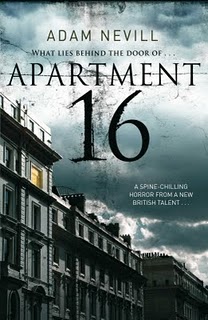
Seth and Apryl's dreams in Apartment 16 by Adam Nevill.
The words of warning uttered by various trusted but mysterious figures, and almost never heeded by the protagonist, in a million suspense novels (Dick Halloran in The Shining, Silas in The Graveyard Book).
Just about everything in any given David Lynch film. I'm thinking specifically of the blue box and key, and the implications of "silencio" in Mulholland Drive.
What I love most about the role of omens and portents in the world of fiction is how it encourages the reader/viewer to use their imaginations and come up with theories or explanations of their own. The blogosphere has been rife with ideas about which werewolf will be the one to take down Mitchell in this Sunday's final episode of Being Human. Among fans, prophecy promotes discussion. Among writers, it offers an off-the-wall manner in which to grab your reader and not let them go until the prediction is either foiled or fulfilled.
 |
| "Silencio" |